
Technology and Responsibility
Gate CrashersThis flow examines the moral tension between acquiring power quickly and becoming mature enough to use it safely.
increasing Bearing strength in each event
 decreasing
Bearing strength in each eventdecreasingStolen Knowledge
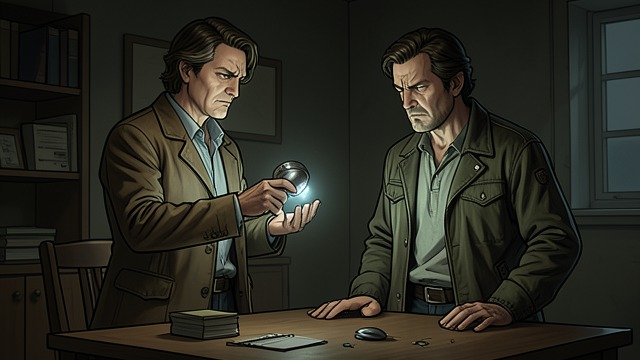
Stolen Knowledge
Felix’s Doubt
Felix Fletcher worries that humanity has not earned the buoy’s technology. If a more advanced civilization had to invent it first, he asks whether humans are mature enough to use it responsibly.
The Reply of History
Thomas Harris answers that the ability to build a weapon has never guaranteed wisdom in using it. Their discussion establishes the ethical dilemma that follows every later breakthrough.
The Armed Courier
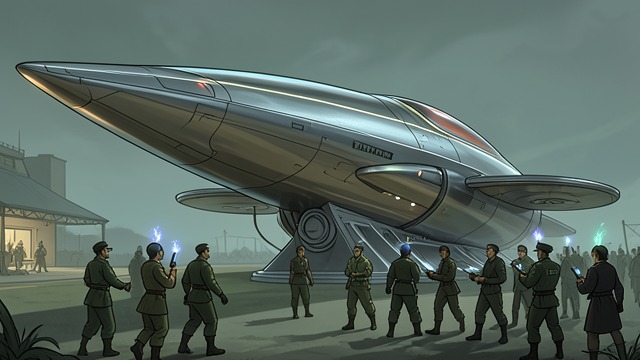
The Armed Courier
Civilian Language
Bucephalus is presented as an explorer while its missiles, armored hull, and Gargoyle platforms reveal its military purpose. Euphemism becomes a technology of political denial.
Security as Justification
The Assembly’s threat makes the military case persuasive, but the ship also embodies the danger of preparing for war before understanding the neighbor. Human defense begins by borrowing the logic of the feared outsider.
The Cost of Experiment
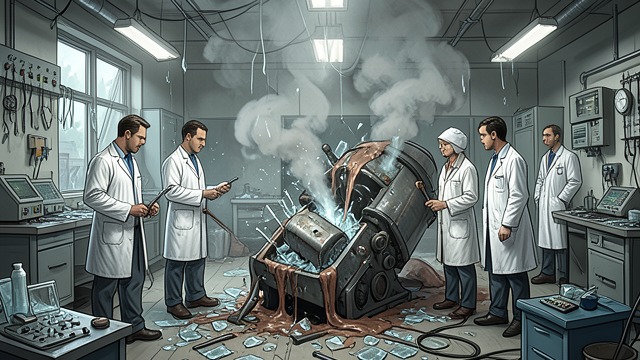
The Cost of Experiment
Failed Prototypes
Several experimental devices explode, disappear, or return altered. The ARTists accept material losses because no crew member dies, but each failure exposes the danger of advancing faster than understanding.
Institutional Pressure
Political deadlines shorten the research cycle. The scientists are expected to produce a miracle while preserving the appearance of control, turning uncertainty into a public-relations problem.
Planetary Destruction
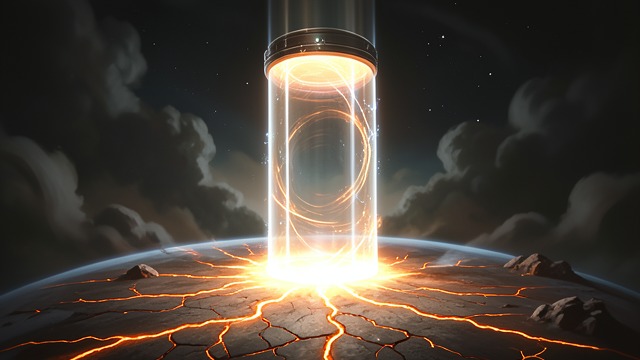
Planetary Destruction
A Weapon at Scale
D’armic explains that an oversized high-space portal can bore through a planet and trigger geocide. The same technology that permits travel can become an instrument of extinction.
A Moral Threshold
Humanity understands that the strategic problem is not merely defense but control over civilization-ending force. The planet becomes the scale at which engineering becomes ethics.
The Unicycle Weapon
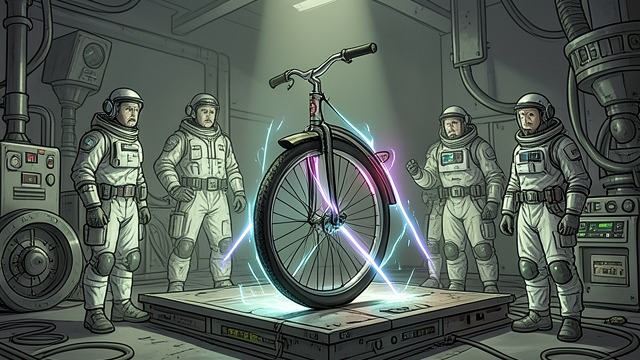
The Unicycle Weapon
Repurposed Infrastructure
The Unicycle was designed to beam power and particles to cooperative ships, not to destroy hidden warships. Eugene Graham and Renée Lemieux convert infrastructure into a defensive weapon under emergency conditions.
Necessity’s Permission
The act violates the spirit of the space-weapons prohibition, but the approaching Xecoron leaves no peaceful alternative. Survival forces humanity to decide whether a forbidden weapon can be morally used once.
During the first ARTists debates
During Bucephalus construction
During the first hyperspace tests
During D’armic’s account of Culpus-Alam
During the defense of Earth
